Key Takeaways
•The short answer: A hypothetical $1,225,000 three-family priced at a 5.1% cap rate (Apartment Loan Store, Boston cap-rate table, as of Oct. 22, 2026), with an assumed 6.5% mortgage (a mid-2026 rate assumption), costs more to borrow against than it earns. Using a 1.20x–1.25x test on net operating income (NOI), the loan tops out at about $642K–$705K, or roughly 42%–48% down. NOI is rent left after vacancy, repairs, taxes, insurance and management.
•What this covers: NOI-based DSCR loans on investment properties, not owner-occupant or gross-rent programs.
•The myth: 20% down is "the bar." It may get you approved. In this example, it also leaves you paying about $988 a month out of pocket.
•The reality: In this example, even at 44%–46% down, the cash return is only about 2%. An all-cash buyer would earn 5.1%.
•The bottom line: The first question for any lender is whether its coverage ratio uses gross rent or NOI.
Will 20% Down Get You a Multifamily DSCR Loan?
Boston Agent magazine (May 25, 2026, a lender-listing guide) reports that most debt service coverage ratio programs, or DSCR loans, lend up to 80% of the purchase price. A DSCR loan qualifies you based on the building's rent, not your paycheck.
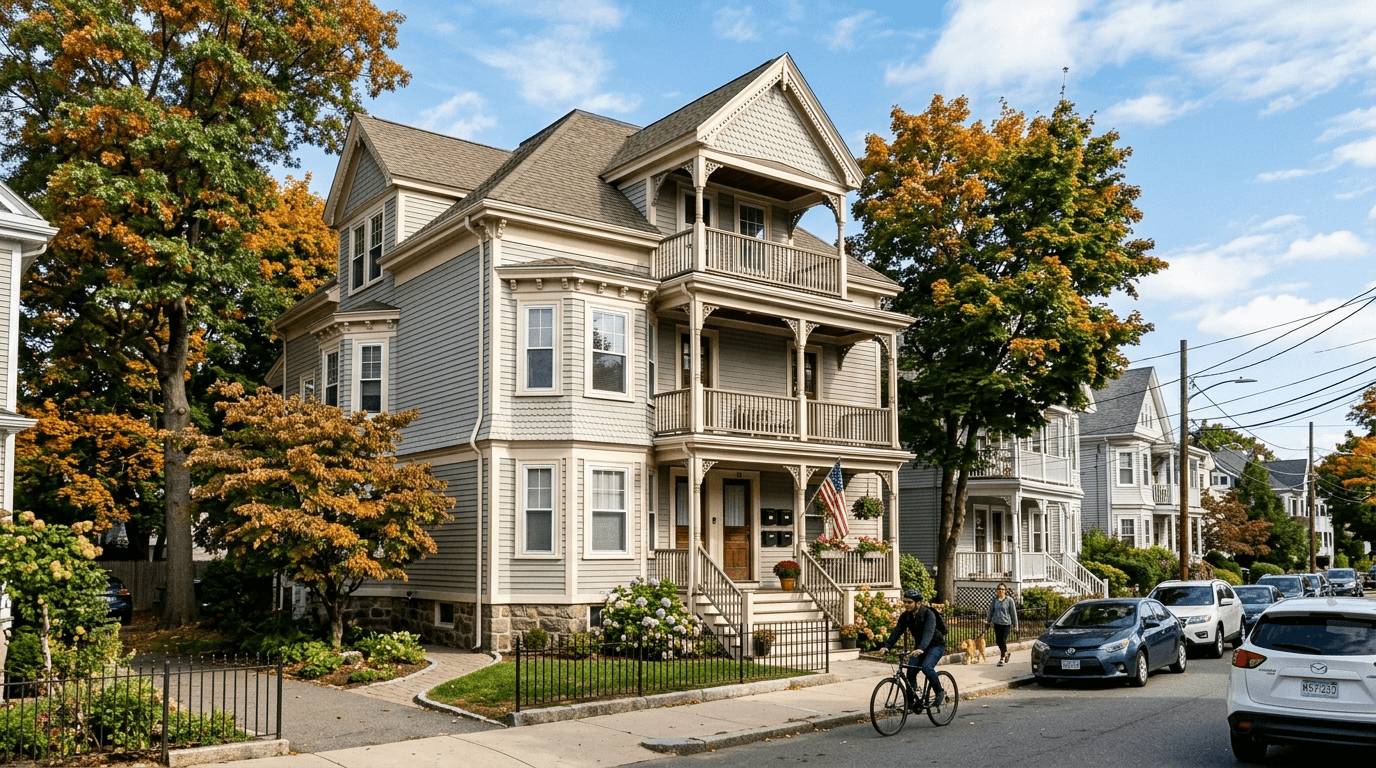
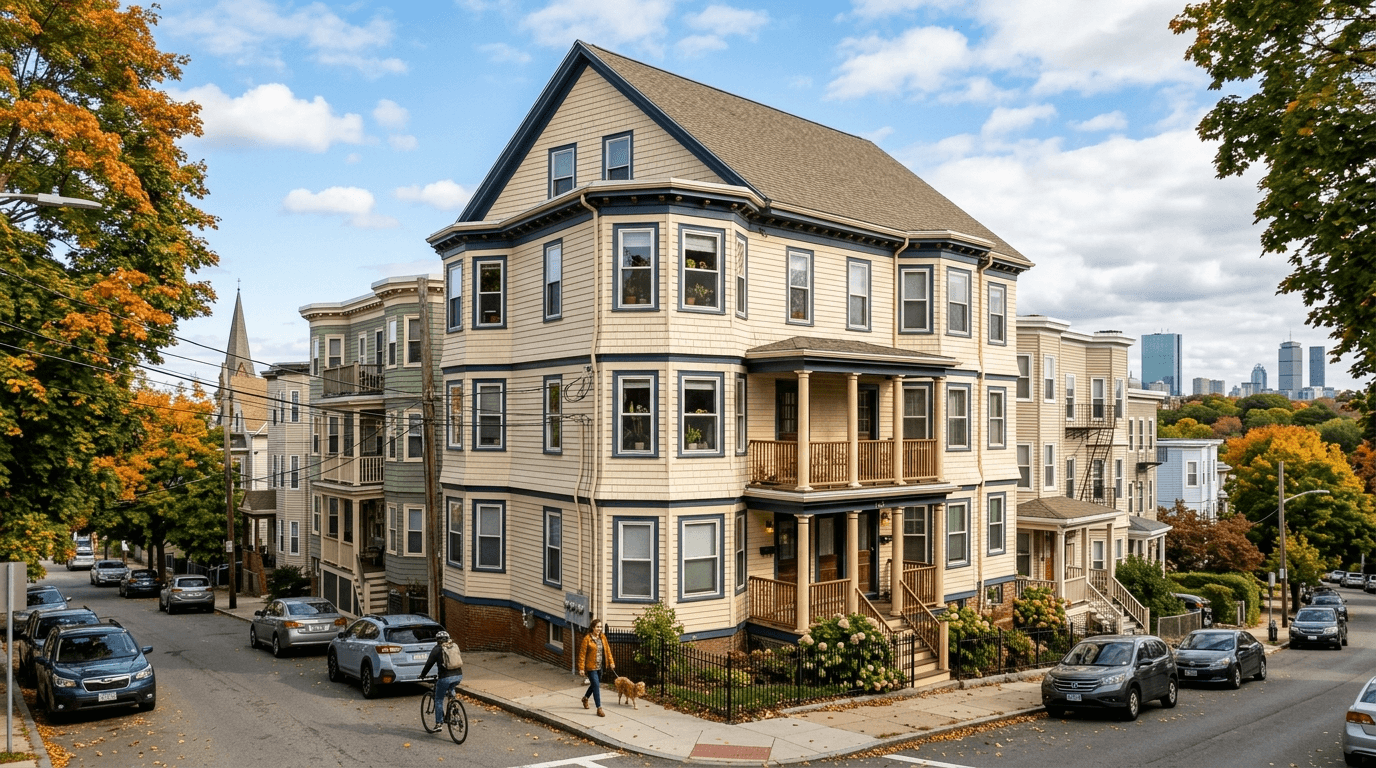
Take a hypothetical $1,225,000 three-family bought at a 5.1% cap rate, with a 6.5% mortgage. The rates used in this example are a mid-2026 assumption of 6.25%–6.75%, in line with Centre Realty Group's mid-year 2026 report (June 2026), which put mortgage rates in the mid-6% range. Rates have since risen. Freddie Mac's 30-year fixed average, a survey of conventional mortgages rather than DSCR quotes, was 7.40% on Oct. 15, 2026. DSCR loans are priced separately, so a lender's quote could differ from either number. At 7.4%, the same building supports about $627K at 1.20x, roughly 49% down (my calculation), so every required down-payment figure below would be higher.
A cap rate is a property's yearly NOI divided by its price. Here, NOI is $62,475.
With 20% down, you borrow $980,000. Over 30 years at 6.5%, principal and interest total about $74,331 a year. That gives only 0.84x coverage, so the building comes up about $988 short each month.
Key Takeaway: Getting approved and covering your costs are two different tests.
Why Can't a 5.1% Cap Rate Cover 6.5% Money?
Borrowing helps when a property earns more than its debt costs. That is positive leverage. This example has negative leverage: each borrowed dollar costs more than it earns.
What matters is the yearly payment as a share of the loan, not the rate alone. At 6.5% over 30 years, that is about 7.58% a year. Each borrowed dollar costs about 7.6 cents a year and earns 5.1 cents. You pay the difference.
The 5.10% figure is the Boston "Luxury Metro B Class" row in a lender's Boston cap-rate table (Apartment Loan Store, as of Oct. 22, 2026). The same lender's other Boston page lists that row as "Multifamily Metro Mid & High Rise," so it is a stand-in for a three-family, not a three-family cap rate. Value-add acquisitions are listed at 6.86%. Matthews' Greater Boston market (June 2026) shows private-capital buyers of 10-100 unit buildings at a 6.5% cap rate, year to date in 2026, against a 5.1% market average over the trailing twelve months. Those are larger buildings than a three-family. At a 6.5% cap rate, the same price would produce NOI of about $79,625, and 20% down would cover the loan at about 1.07x, a small surplus of about $441 a month (my calculation). That is still below a 1.20x test, and negative leverage would still hold, because 6.5% is below the 7.58% yearly loan cost. The result depends on this stand-in.
Boston Multifamily Cap Rates by Asset Class, Oct. 2026
Apartment and multifamily cap rates for Boston by class and strategy as of Oct. 1, 2026.
| Series | Label | Value |
|---|---|---|
| Cap Rate | Luxury Metro A Class | 4.70% |
| Cap Rate | Luxury Metro B Class | 5.10% |
| Cap Rate | Luxury Metro C Class | 5.64% |
| Cap Rate | Suburban A Class | 4.75% |
| Cap Rate | Suburban B Class | 5.18% |
| Cap Rate | Suburban C Class | 5.65% |
| Cap Rate | Value Added Acquisition | 6.86% |
Even the 6.86% value-add cap rate is below the 7.58% yearly cost of a 6.5% loan, so the gap there is smaller but still negative. Other building types and prices would change the result, so this example does not describe every Boston multifamily deal. Value-add deals also carry renovation and execution risk.
At 6.5%, this NOI would support positive leverage only at a price below about $824K (my calculation).
Key Takeaway: In this example, every dollar you borrow lowers your return.
How Does the 1.20x Rule Set Your Down Payment?
Start with a different question: how much debt can the building's income carry at a 1.20x test?
This example uses a 1.20x–1.25x test on NOI to show when the building pays for itself. Lenders set their own minimum ratios. A 1.20x ratio means $1.20 of NOI for every $1.00 of debt payment.
Divide the $62,475 NOI by 1.20. That allows $52,063 a year, or about $4,339 a month, for the mortgage. At 1.25x, the limit is $49,980 a year.
The table below shows how much this building's income can borrow at assumed rates of 6.25%–6.75%, a mid-2026 assumption.
Boston Three-Family Maximum Loan and Down Payment by DSCR Requirement
Compares maximum loan amounts and required down-payment percentages for a $1,225,000 Boston three-family investment at 1.20x and 1.25x DSCR across 6.25% to 6.75% mortgage rates in fall 2026.
| Category | Max loan at 1.20x | Down payment at 1.20x | Max loan at 1.25x | Down payment at 1.25x |
|---|---|---|---|---|
| 6.25% | $704,600 | 42.5% | $676,450 | 44.8% |
| 6.50% | $686,400 | 44.0% | $658,950 | 46.2% |
| 6.75% | $668,900 | 45.4% | $642,150 | 47.6% |
Source: My calculation for a hypothetical $1,225,000 three-family, from a 5.1% cap rate (Apartment Loan Store, Boston cap-rate table, as of Oct. 22, 2026) and assumed mortgage rates of 6.25%–6.75%, a mid-2026 assumption (Centre Realty Group's mid-year 2026 report put rates in the mid-6% range). Centre Realty Group did not publish this table. Scope: Boston three-family example.
At 6.5%, that payment supports a loan of about $686,400 at 1.20x (44.0% down) or $658,950 at 1.25x (46.2% down). At 6.25%, the 1.20x limit is $704,600, or 42.5% down. At 6.75% and 1.25x, the limit is about $642,000, or roughly 48% down. Across these scenarios, you need roughly $520K–$583K in cash before closing costs.
What about 35%–40% down? At 6.5%, 40% down gives 1.12x coverage and 35% down gives 1.03x. Neither meets a 1.20x NOI test.
Lenders that divide gross rent, meaning total rent before expenses, by the full monthly obligation (principal, interest, taxes, insurance and any HOA dues) use a different measure from an NOI test. Boston Agent (May 25, 2026) describes that definition. This example has no gross-rent figure, so it cannot show whether 35% or 40% down would pass one. Gross rent is not what reaches the owner's bank account, though.
How the lender runs the numbers makes a large difference. At 35% down, you need $428,750 in cash. At 46% down, you need about $566,000, a gap of roughly $137,000.
Key Takeaway: The lender's coverage test sets your down payment, not your savings.
What Does 44%–46% Down Actually Earn?
Cash-on-cash return is your yearly cash flow divided by the cash you put in. At 6.5%:
•20% down: −4.8%
•35% down: +0.5%
•40% down: +1.4%
•44% down (1.20x): 1.9%
•46% down (1.25x): 2.2%
In this example, even with nearly half the price in cash, the return is about 2%. An all-cash buyer would earn the full 5.1% before any debt costs. At these prices and rates, leverage lowers the return. The cash return rises only with more cash down, a lower price or a lower rate. Appreciation is a different test.
Other costs can reduce the return further:
•Loan fees: A Chicago Agent Magazine partner-content roundup of Midwest DSCR lenders (May 25, 2026) puts origination fees, charged by the lender at closing, at 0%–3%.
•Reserves: Lenders set their own cash-reserve requirements, counted in months of payments.
•Broker fees: Under the Massachusetts broker-fee law that took effect Aug. 1, 2025, the person who hires the broker pays the fee (Mass.gov, checked Oct. 23, 2026).
The NOI here comes from the cap rate, not from a rent roll. For scale, $62,475 of NOI is about $5,206 a month before any mortgage payment (my calculation).
Key Takeaway: In this example, a bigger down payment shrinks the loan but lifts the cash return only to about 2%.
What Are the Strongest Arguments Against This Math?
"Lenders use gross rent divided by the full payment, approve at 1.0x, and some go to 0.75x. So 20%–25% down works."
For approval, that is often true. A Midwest lender roundup (Chicago Agent Magazine partner content, May 25, 2026) confirms that definition and says some specialty programs accept 0.75x, with larger down payments and higher rates. Some lenders approve at 20% down.
Approval does not mean the building pays for itself. Measured on NOI in this example, 20% down leaves a shortfall of about $988 a month at an assumed 6.5%. The roughly 42%–48% down range is what lets the building meet a 1.20x–1.25x test, not the minimum needed for a loan.
"Owner-occupants buying a triple-decker don't use DSCR math. The rent they stop paying offsets the gap."
That is a fair point. An owner-occupant gives up one unit's rent and often uses different loan terms, so the $988 monthly shortfall in this example would not apply as stated. A lender can run the numbers for that case.
What Would Flip the Math This Fall?
•A lower price: about $824K for this NOI at 6.5% (about $752K at 7.4%, my calculation).
•Higher NOI: through rent growth or lower costs.
•Cheaper debt: at 6.5%, the yearly payment is about 7.6% of the loan, and it would need to fall below 5.1%. That takes a rate near 3% (my calculation), far under the 6.25%–6.75% assumed here and the 7.40% Freddie Mac reported for its 30-year fixed average on Oct. 15, 2026.
Some buyers weigh appreciation and principal paydown (the part of each payment that reduces what you owe) alongside first-year cash flow. This example measures only first-year cash flow.
Boston Agent magazine (May 25, 2026) notes that DSCR cash-out refinances, new larger loans that let you pull out equity, allow up to 75% of value with most programs once equity builds. Until then, a 44%–46% down payment ties up a lot of cash.
Four questions a buyer can put to each lender:
1. Do you calculate DSCR on gross rent or on NOI?
2. What is your minimum ratio?
3. What is your origination fee?
4. How many months of reserves do you require?
To see this math for a specific Boston three-family, send me the rent roll (a list of each unit's current rent), taxes, insurance and asking price. I'll run the numbers on it.
This article is general information, not legal or tax advice. Talk to your CPA and attorney about your own situation.